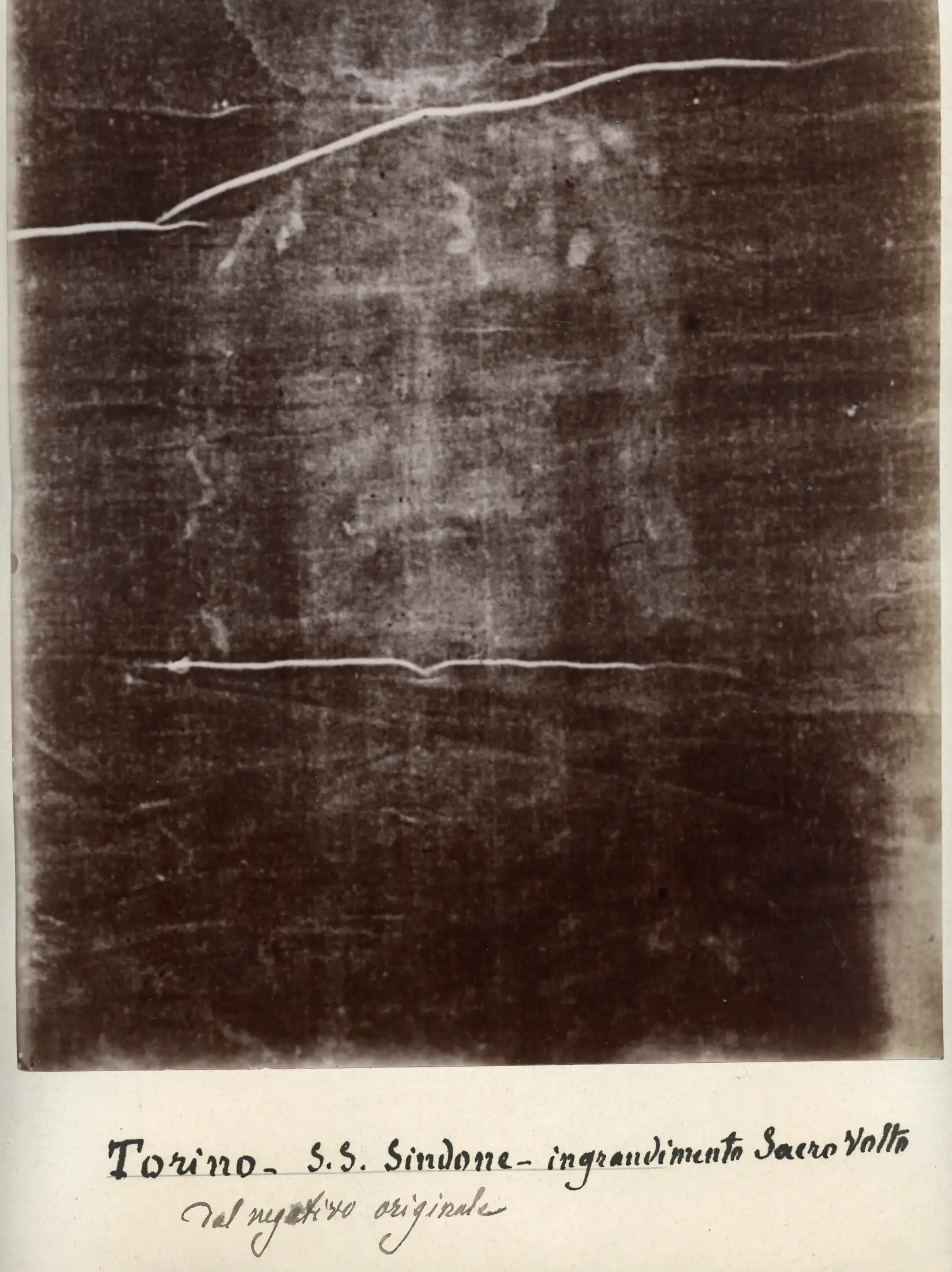
1898: the negative
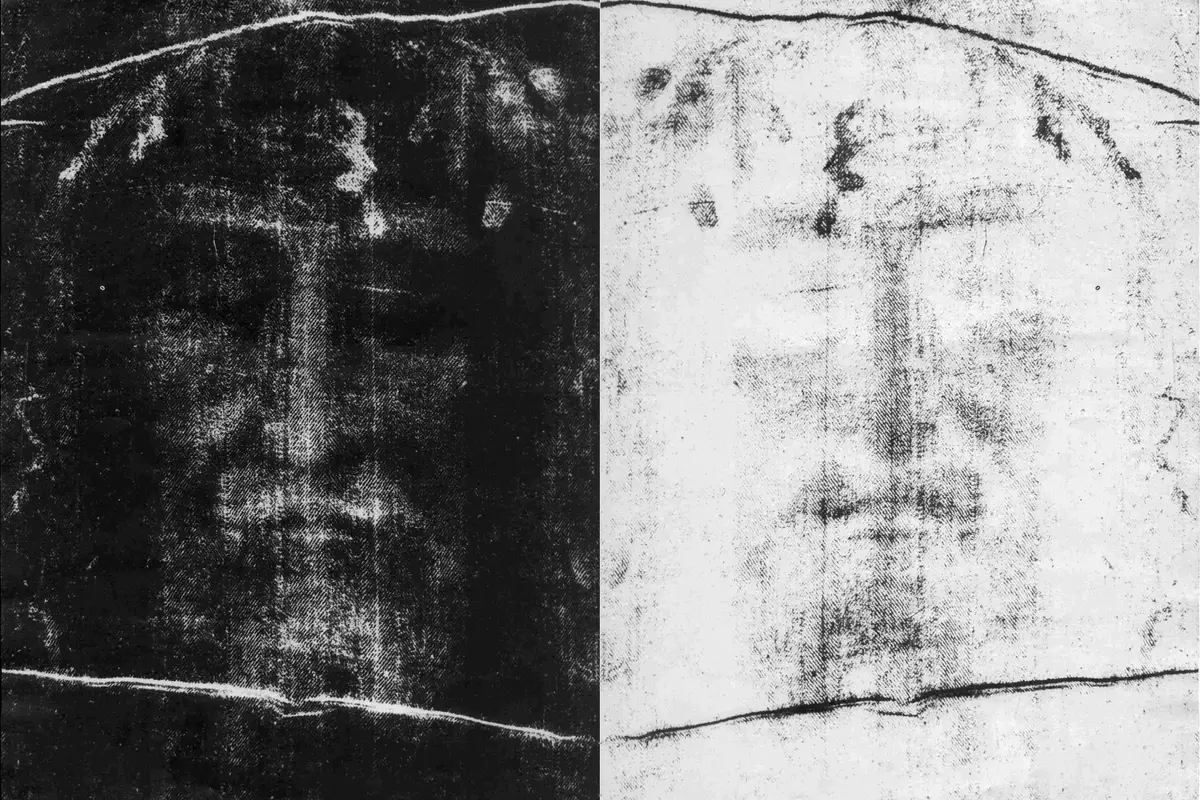
On 28 May 1898, during a public exposition, an amateur photographer and lawyer named Secondo Pia was allowed to photograph the Shroud. His first attempt three days earlier had failed. That night, developing the glass plates in his darkroom, he watched a face come up on the negative. Not the faint ghost on the cloth, but a face with shading, closed eyes, a beard, a lifelike positive. Documented Pia
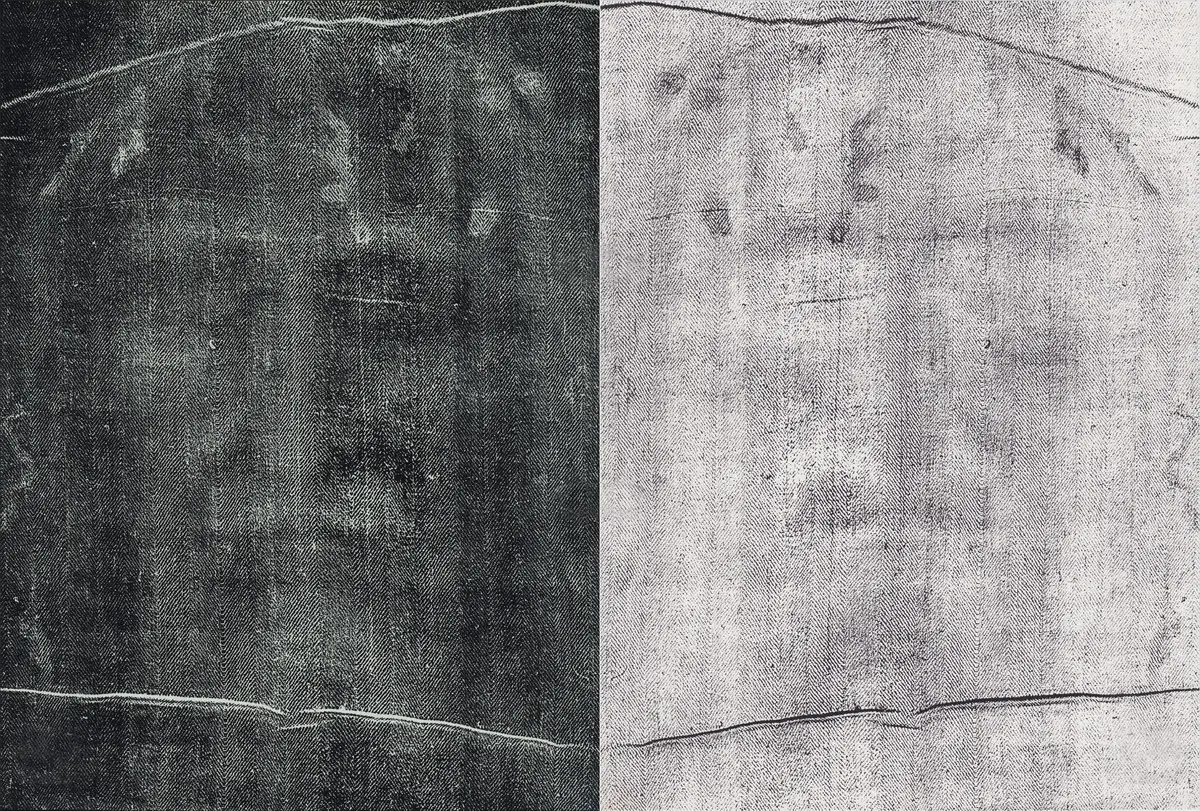
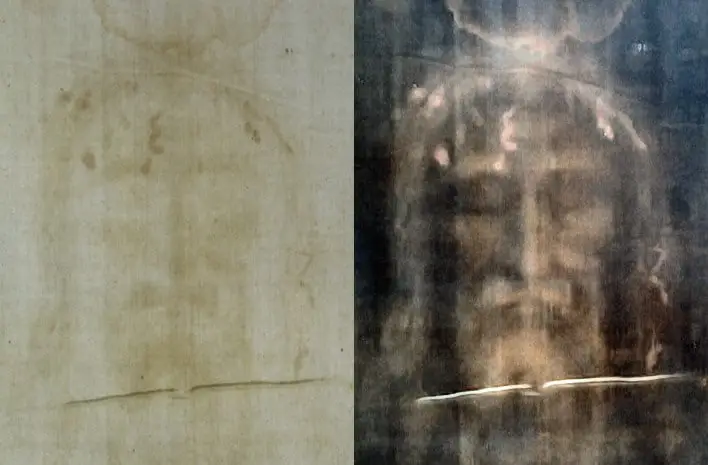
What this meant was that the marks on the cloth behave like a photographic negative. Where a face is bright, the cloth is dark; where a face falls into shadow, the cloth is pale. Nobody had seen the face as a face before, because nobody had seen it reversed.
Pia was accused of faking the plates. The accusation stood for thirty-three years, until Giuseppe Enrie rephotographed the cloth in 1931 with professional equipment and got the same result. Pia was present. Documented Pia Chronology
The Enrie photographs are the ones most people know. They were also the photographs that, forty-five years later, went into the machine.
1976: the relief
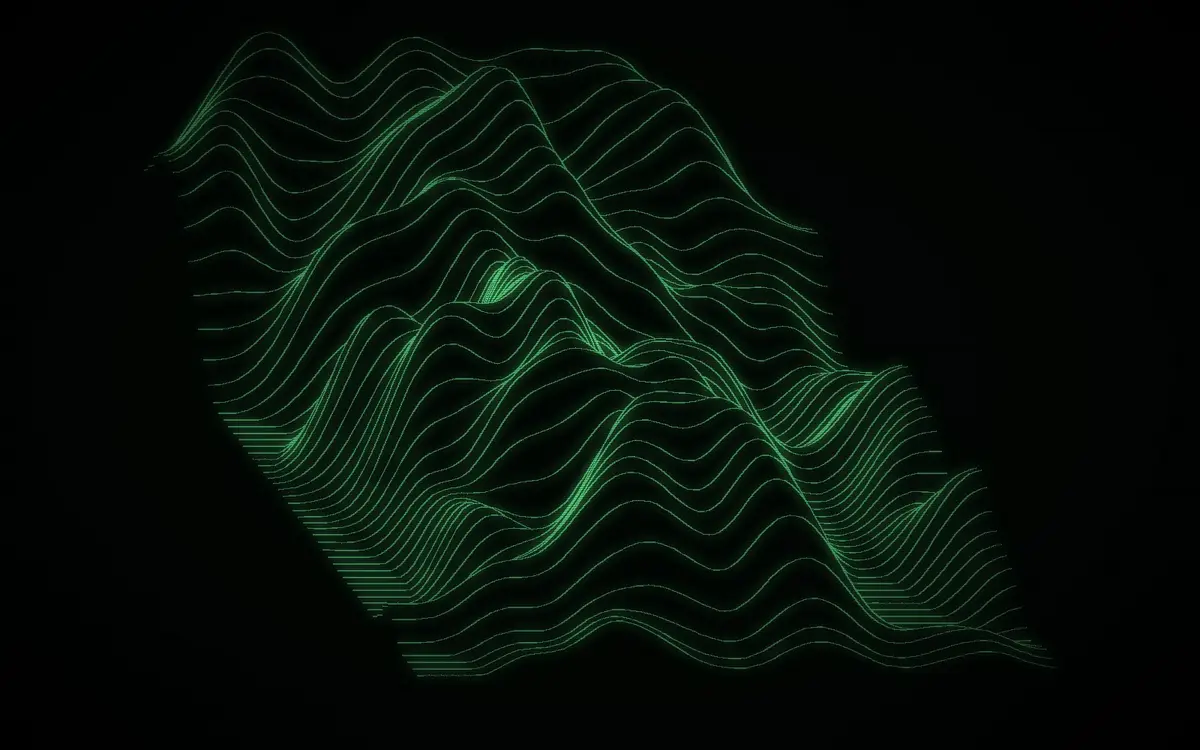
On 19 February 1976, at Sandia Laboratories in Albuquerque, two Air Force captains, the physicist John Jackson and the engineer Eric Jumper, put photographs made from Enrie's 1931 plates through a VP-8 Image Analyzer. Documented Chronology Schumacher
The VP-8 was a commercial analog device, made from 1972 by Interpretation Systems of Lawrence, Kansas, that converted the brightness of a photograph into height and displayed it as a relief on a screen that could be rotated. It was used on aerial photographs and X-rays. Put an ordinary photograph of a face through it and the result is distorted: a nose and a cheek at the same brightness come out at the same height, and the face collapses.
The Shroud image did not collapse. It produced a relief of a human form, the nose highest, the eye sockets deep, the shape of a man lying under a cloth. The engineer who built and delivered the machine, Pete Schumacher, wrote later: "Only the Shroud of Turin has produced these results from a VP-8 Image Analyzer." Documented Schumacher
The interpretation is that the darkness of the image at any point tracks the distance between the cloth and the body underneath it. Where the cloth touched, the image is darkest. Where the cloth was held off the body by a few centimeters, it fades to nothing. The image, in other words, encodes three-dimensional information about a body. Documented Jumper and Mottern STURP 1981
Two cautions belong here. First, the VP-8 shows that the image has this property; it does not say how the image got it. Second, a rubbing taken from a carved relief also encodes relief, since the high points of the carving take more color. Whether a relief rubbing gives a VP-8 result like the Shroud's is itself argued. Contested See The Case Against.
The 1976 result was the direct reason the 1978 examination happened. Jackson and Jumper assembled the team, and the team went to Turin to find out what the cloth itself would show.
1978: what the instruments found
The examination of October 1978 is its own page. The findings about the image, published over the following three years, were these.
The color is on the surface only. The image is confined to the topmost fibers of the threads. It does not soak in. It does not wick along the threads. Cut a colored fiber and the inside is clear. In 1978 the team saw the color "one fiber deep." Later measurements put the colored layer at about 200 nanometers, thinner than a wavelength of visible light. Documented Adler 1999 Fanti 2010
There is no pigment, paint, dye or stain. The project's chemists, John Heller and Alan Adler, ran the image fibers through the standard tests for pigments, dyes and binders and found none. The X-ray fluorescence survey found no difference in heavy elements between image and non-image areas. The color is a change in the linen itself: a dehydrative oxidation of the cellulose, the same chemistry as linen that has aged or been lightly scorched, but confined to the image. Documented Heller and Adler XRF 1980 STURP 1981
The one dissent is Walter McCrone's. See below.
There is no directionality. Brush strokes, rubbing strokes, any applied medium leaves a direction. Under magnification the image has none. Documented STURP 1981
The image is a halftone. The tone of the image at any point depends on how many fibers are colored, not on how dark each fiber is. Every colored fiber is colored to about the same degree. Darker areas simply have more of them. Documented Heller and Adler
There is no image under the blood. Where a bloodstain was removed with a protein-digesting enzyme, the fiber beneath was clean. The blood went onto the cloth before the image did. A forger painting wounds onto a figure works the other way round. Documented Heller and Adler Rogers 2002
The image does not fluoresce; the scorches do. Under ultraviolet light, the lightly scorched areas from the 1532 fire fluoresce reddish-brown, and a control scorch the team made on linen with a soldering iron fluoresced too. The image does not fluoresce at all. This is the strongest evidence against the image being an ordinary scorch. The project's own summary nonetheless noted that a similar change in linen "can be obtained by sulfuric acid or heat," so the scorch question is answered for ordinary heat and left open in principle. Documented Miller and Pellicori STURP 1981
The dorsal image has the same density as the frontal image. A body's weight pressing on the cloth made no difference to the color. A contact image should be darker where the body lay heavy. Documented Rogers 2002
Contact alone cannot make it. The team laid cloth over bodies and over statues and took impressions. Contact produces a smeared, widened image, and cannot reproduce the gradation of a face. The project concluded that contact "is totally incapable of explaining the image of the face." Documented Jumper and Mottern STURP 1981
1981: the verdict
The Shroud of Turin Research Project published a one-page summary of its conclusions in October 1981. These sentences are verbatim. Documented STURP 1981
"No pigments, paints, dyes or stains have been found on the fibrils."
"It is not the product of an artist."
"We can conclude for now that the Shroud image is that of a real human form of a scourged, crucified man."
"The blood stains are composed of hemoglobin and also give a positive test for serum albumin."
"However, there are no chemical or physical methods known which can account for the totality of the image, nor can any combination of physical, chemical, biological or medical circumstances explain the image adequately."
"Thus, the answer to the question of how the image was produced or what produced the image remains, now, as it has in the past, a mystery."
Two things the summary does not say, because they are sometimes attributed to it: it does not say the image is not a scorch, and it does not say the image is not a print. It says no known method accounts for the totality of it.
The dissent: McCrone
Walter McCrone was the most famous microscopist in America. He examined the 1978 tape samples and, from 1979, reported red ochre (iron oxide) and vermilion in a collagen tempera binder on the image fibers, and concluded the Shroud was a painting of about 1355. He never withdrew the claim. Claimed McCrone
The project's reply: iron oxide particles are on the cloth, but they are on the non-image areas at the same density as on the image areas, and far denser at the margins of the water stains. Flax is retted in water and takes up iron; the 1532 water carried it to the edges of the stains; centuries of folding spread the rest. No binder was found. No vermilion as a painting medium was found by anyone else. The color of the image is in the fiber, not on it. Documented Heller and Adler McCrone left the project. The argument never formally ended. See The Case Against for his case at full strength.
Later measurements
- 2004, Giulio Fanti and Roberto Maggiolo reported, from the 2002 restoration photographs, a faint image of the face and perhaps the hands on the reverse side of the cloth, under where the Holland backing had been, with no body image and nothing in the middle of the cloth. The image would then be on both outer surfaces and not between them. Contested Fanti 2004
- 2010, Giulio Fanti and colleagues measured the colored layer at about 200 nanometers. Documented Fanti 2010
- 2011, the Italian national agency ENEA at Frascati reported that bursts of ultraviolet laser light lasting billionths of a second could produce a color on linen similar to the image's, and just as shallow. The power required to color a whole body at once was calculated at about 34 trillion watts in a single flash. The lead scientist, Paolo Di Lazzaro, warned against reading this as evidence of a miraculous flash, and said a medieval forgery "appears unlikely" on the evidence. Documented ENEA Di Lazzaro
What no one has done
No one, from any camp, has produced a full-size image on linen that is a photographic negative, encodes three-dimensional information, is confined to the top fibers, has no pigment, no directionality and no image under the blood, all at once. The methods proposed since 1981 each reproduce some of these properties. See How Could the Image Form? for every one of them. Documented STURP 1981 Vatican News 2026
That sentence is the state of the question. It is not an argument for anything. It is where the argument stands.
Last checked 2026-10-20.